Is CrossFit Harder Than Gym?

Yes. And that's exactly why it works better.
But "harder" isn't the right word. More effective? Absolutely. More efficient? Without question. More likely to get you the results you're actually looking for? That's the real story.
Here's what you're actually asking: "Should I join a CrossFit gym or stick with my regular gym membership?"
And the answer, if you're serious about getting fitter, stronger, and healthier, is CrossFit. Let me tell you why.
Time: The Real Currency
You have 168 hours in a week. Maybe you can dedicate five to seven of those to fitness if you're organized. More likely, you've got three or four hours, maximum.
CrossFit gives you more results per hour than anything else you could be doing in a gym. This isn't opinion. It's math.
A typical CrossFit workout lasts 45-60 minutes, including warm-up and cool-down. Within that hour, you're getting:
Strength training
Cardiovascular conditioning
Mobility work
Skill development
Metabolic conditioning
At a traditional gym, getting the same training effect requires separate sessions. A strength day. A cardio day. Mobility work squeezed in if you remember. Skills? Most people never even start.
You'd need six or seven hours per week to replicate what CrossFit delivers in three or four. And that's assuming you actually know what you're doing, which brings us to the next point.
Coaching: The Difference Between Guessing and Knowing
Walk into most gyms and you're on your own. Sure, there might be a trainer you can hire for £50 an hour. But during your actual workout? You're guessing.
Guessing if your form is correct. Guessing if the weight is appropriate. Guessing if you should do three sets or five. Guessing how long to rest. Guessing whether that twinge in your shoulder is normal or the beginning of an injury.
CrossFit eliminates the guessing.
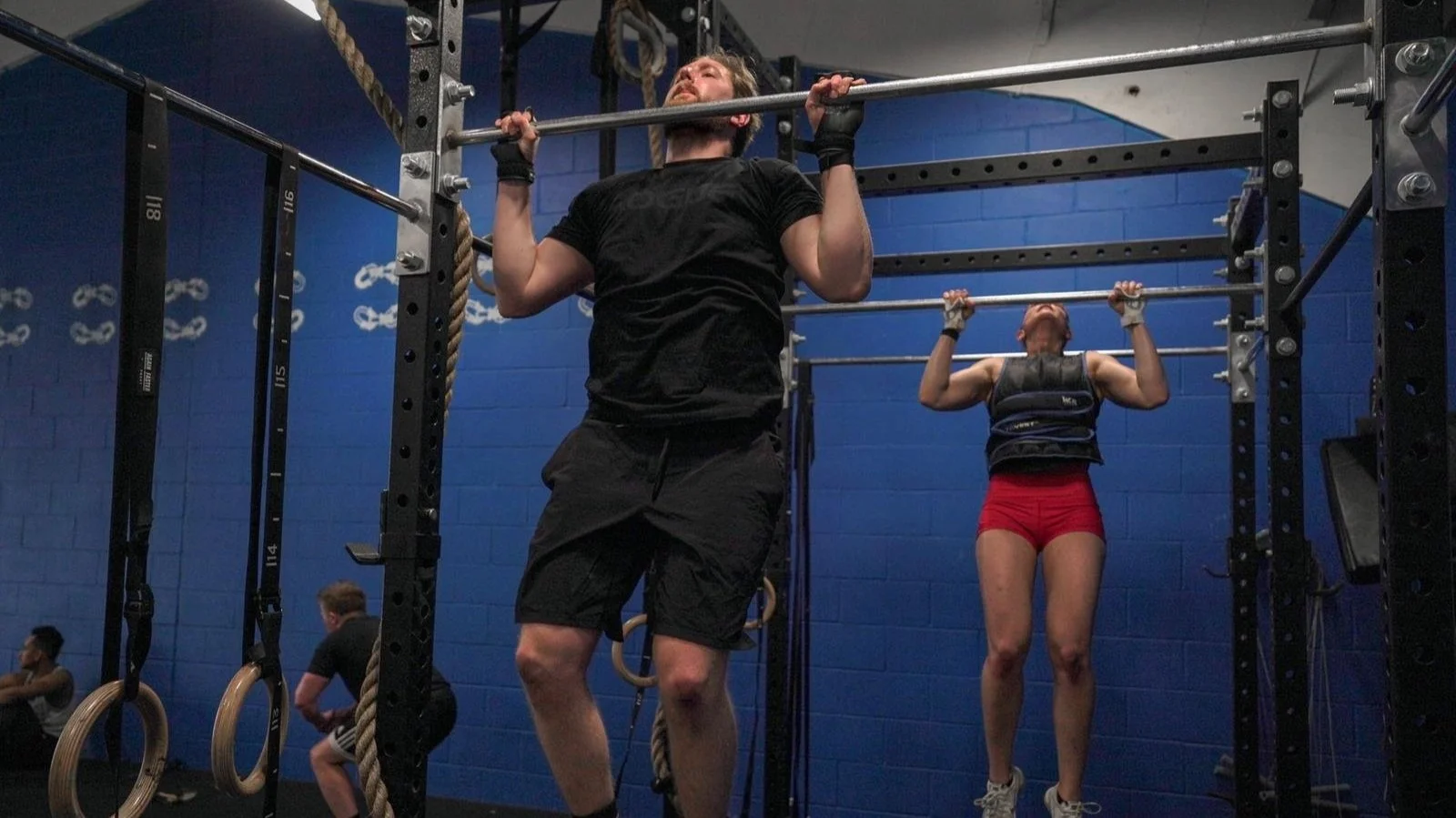
Every session, you have a qualified coach watching you move. They see the compensation patterns you can't feel. They catch the form breakdown before it becomes an injury. They know when to push you harder and when to scale you back.
This isn't some luxury add on. It's built into the price you're already paying.
Think about what coaching does: it compresses your learning curve. It prevents injuries. It ensures you're actually getting better, not just going through the motions. It gives you feedback in real-time when feedback actually matters.
You could spend a decade in a traditional gym doing movements incorrectly, never knowing why you're not progressing. Or you could spend a month in CrossFit with a coach who corrects your positioning, explains the "why" behind the programming, and adjusts the workout to your current capabilities.
The gap in results is enormous.
Something For Everyone, Every Day
Here's the objection I hear most often: "But I'm not fit enough for CrossFit."
That's like saying you're not clean enough to take a shower.
CrossFit scales. Every workout, every movement, every day. That's not marketing speak it's how the methodology actually works.
The same workout that challenges the fittest person in the room also works for the person who showed up for their first class this morning. The movements scale. The weights scale. The volume scales. The intensity scales.
A pull up becomes a ring row becomes a banded pull up becomes a jumping pull-up becomes the real thing. A barbell back squat becomes a goblet squat becomes a box squat becomes bodyweight only. The stimulus remains the same. The adaptation happens regardless of where you start.
This is fundamentally different from a traditional gym, where you're left to figure out your own modifications. Where you skip exercises because you don't know how to scale them. Where you do the easy version forever because nobody's there to progress you to the next level.
At CrossFit, scaling is the system, not the exception. The 22 year-old athlete and the 62 year-old beginner do the same workout. They just do different versions of it, both appropriate to their current fitness level.
And here's what matters: both of them get better. Both of them are challenged. Both of them leave feeling like they accomplished something real.
You don't need to be fit to start CrossFit. You need to start CrossFit to get fit. That's the whole point.
Community: The Secret Ingredient
Let's talk about the thing that actually makes CrossFit different: the people.
You don't go to a traditional gym to make friends. You go to put your headphones in, do your thing, and leave. Maybe you nod at the regular you see on Tuesdays. Maybe you don't.
CrossFit is the opposite. You know people's names. You cheer for them during their workouts. They notice when you're not there. They ask how your shoulder is healing. They remember your PB and celebrate when you beat it.
This isn't some soft, touchy-feely bonus. This is the mechanism that makes everything else work.
The community is why you show up on days when you don't feel like it. It's why you push harder in the last minute of a workout. It's why you keep coming back month after month, year after year.
Humans are social creatures. We're wired to be part of tribes. We perform better, try harder, and stay more consistent when we're part of a group that expects something from us.
Traditional gyms understand this intellectually, which is why they all have "community" in their marketing. But you can't manufacture community by putting people in the same building. You create it through shared challenge, mutual encouragement, and regular interaction.
CrossFit builds this by design. Everyone does the same workout. Everyone suffers together. Everyone improves together. The 6am class becomes your people. You text them outside the gym. You grab coffee after Saturday's workout. You have friends who understand why you're excited about a new deadlift PB.
This matters more than you think. Fitness isn't a solo journey you complete and check off. It's a lifestyle you maintain for decades. And you're far more likely to maintain it when you're part of a community that makes it enjoyable, not just effective.
Results: What You Actually Care About
Strip away everything else and ask the question that matters: which approach gets you fitter, faster?
CrossFit wins. And it's not particularly close.
The programming is designed by people who understand exercise science, periodization, and progressive overload. You're not guessing what to do today. You're following a program that builds on itself week after week, month after month.
Compare that to the traditional gym approach: chest and triceps Monday, back and biceps Wednesday, legs Friday (maybe), cardio when you feel guilty. No progression plan. No periodization. No tracking of whether you're actually getting stronger or just doing the same weight for the same reps forever.
CrossFit tracks everything. Your times. Your loads. Your benchmark workouts. You can see, objectively, whether you're improving. And when you have data, you can make progress systematic instead of random.
The variety matters too. Your body adapts to whatever stress you give it regularly. If you do the same workout split for months, your body gets efficient at that specific thing and stops improving. CrossFit constantly varies the stimulus. Different time domains. Different movement patterns. Different energy systems.
This forces constant adaptation. Which means constant improvement.
And the intensity, yes, we need to talk about this—is simply higher in CrossFit than what most people achieve on their own. Not because CrossFit people are tougher. Because the environment demands it. The clock is running. The coach is watching. Your classmates are working. You push harder than you would alone.
That higher intensity, applied consistently with proper programming and coaching, produces better results in less time. This is why people see changes in weeks at CrossFit that took months or never happened at their previous gym.
The Cost Objection
"But CrossFit is expensive."
Yes. It costs more than a budget gym membership. Let's address this directly.
A traditional gym membership might cost £25-45 per month. CrossFit might cost £150-210 per month. That's 3-4 times more expensive.
Now let's look at what you're actually buying.
At the traditional gym, you're buying access to equipment. At CrossFit, you're buying:
Professional coaching every session
Structured programming designed by experts
A community that supports your progress
Accountability that ensures you actually show up
Scaling and modifications appropriate to your level
Measurable results in less time per week
Which is the better value?
If you went to a traditional gym three times per week and hired a personal trainer for each session, you'd spend £250-300 per month just on training, plus your membership. CrossFit includes that coaching in the base price.
If you paid for a proper programming template from a qualified coach, that's another £50-100 per month. CrossFit includes that too.
The question isn't whether CrossFit costs more. It's whether you're getting more value for what you're paying. And when you factor in coaching, programming, community, and results, CrossFit delivers significantly more value per pound spent.
Plus, there's this: a gym membership you don't use costs the same as one you do use. It doesn't matter if you paid £20 or £200 if you stop going. CrossFit's higher price point actually works in your favor because you're more invested. You show up because you're paying for it. Which means you actually get the results you're paying for.
Why People Actually Succeed in CrossFit
The traditional gym model has a failure rate of about 80%. Most people quit within the first six months. They don't cancel their membership—that would require action—they just stop showing up.
CrossFit has the opposite problem. People join and then won't leave. They keep coming for years. Decades, even.
Why?
Because CrossFit solves the real problems that make people quit fitness:
Boredom: Every workout is different, so you never fall into a rut
Lack of progress: The programming ensures you're constantly improving
No accountability: The community and class structure keep you showing up
Not knowing what to do: The coach programs everything and teaches you proper form
Isolation: You're part of a group working toward shared goals
Plateaus: The constant variation prevents adaptation and stagnation
These aren't small things. These are the actual reasons people fail at fitness. And CrossFit systematically addresses every single one.
The traditional gym leaves all of these problems for you to solve on your own. Which is fine if you're the kind of person who can maintain motivation, design effective programming, push yourself to appropriate intensity, and stay consistent for years without external support.
But most people aren't that person. And pretending you are when the statistics say you probably aren't is just setting yourself up to waste time and money on a gym membership you'll stop using within six months.
So, Is CrossFit Harder?
Yes. It's harder because you'll actually do it consistently.
It's harder because someone's watching your form and correcting it before you develop bad habits.
It's harder because the programming is designed to make you improve, not just maintain.
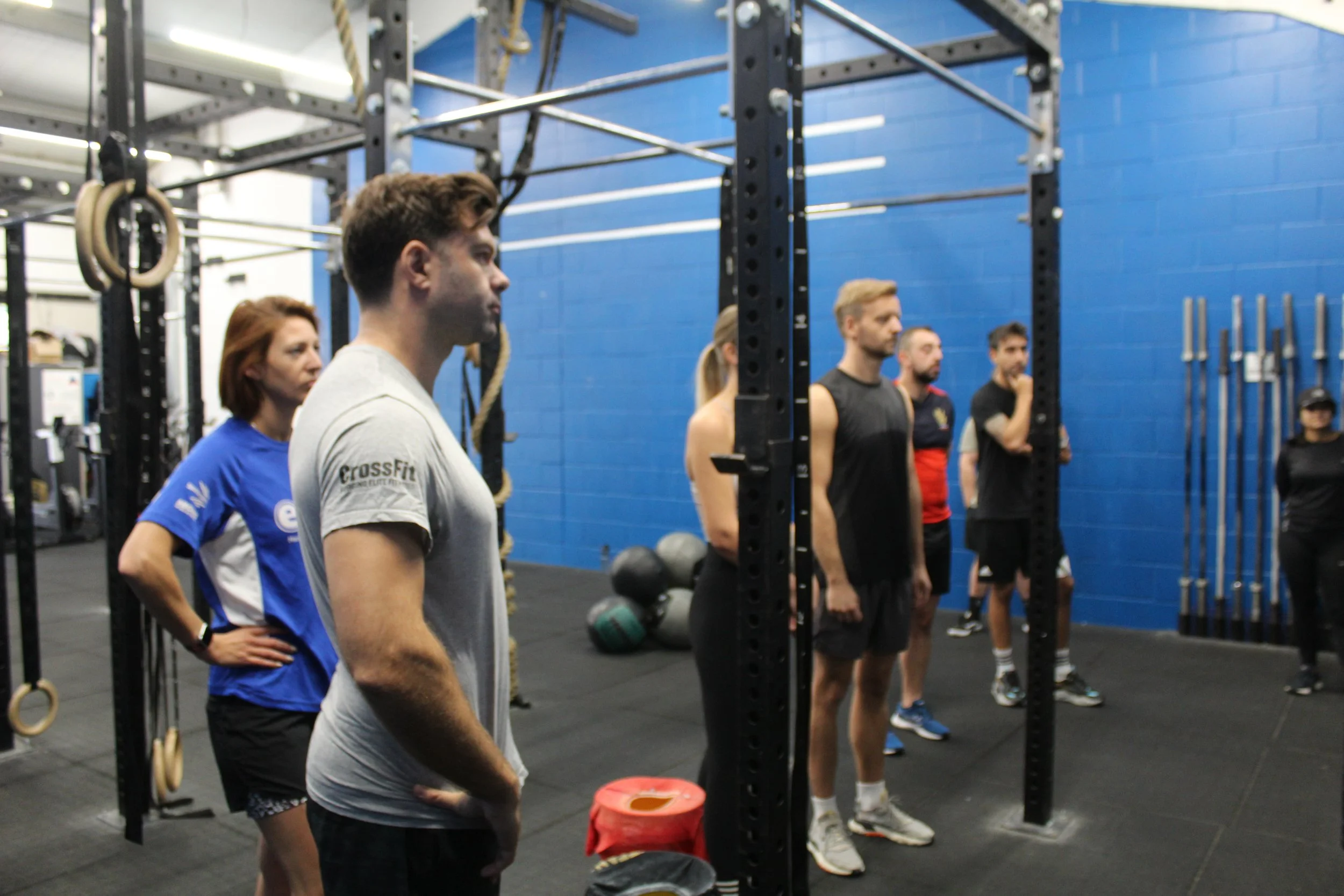
It's harder because you're part of a community that expects you to show up.
It's harder because every workout scales to your level, so you can't hide behind "I'm not fit enough yet."
But here's what matters: "harder" in this context means "more effective." It means results in less time. It means sustainable progress instead of sporadic effort. It means you're still doing this in five years instead of having another expired gym membership gathering dust in your wallet.
The traditional gym works for about 20% of people. If you're in that 20% disciplined, knowledgeable, self motivated then great. You don't need CrossFit.
But if you're in the 80% who struggle with consistency, get bored easily, don't know how to program effectively, or need community and accountability to stay on track? CrossFit isn't just better. It's probably your only real option for long term success.
The question isn't whether CrossFit is harder than the gym. The question is whether you're ready to do something that actually works.
Because here's the thing nobody wants to hear: the gym membership you don't use isn't a good deal, no matter how cheap it is. And the CrossFit membership you use three times per week for the next decade isn't expensive, it's the best investment you'll ever make in your health.
Choose accordingly.