Is CrossFit More Cardio or Strength?
The question itself is the problIt assumes CrossFit lives in one lane or the other. That it's either the sweaty, lung-burning cousin of running or the heavy, iron-clad sibling of powerlifting.
But CrossFit doesn't pick a side. And that's precisely why it works.
The Misconception Most Beginners Bring Through Our Doors
At CrossFit 1864, I've watched hundreds of people walk in with the same confused expectation. They think they have to choose. They think fitness is binary.
"Am I here to sweat, or am I here to lift?"
The answer lands differently than they expect. You're here for both. At the same time. All the time.
Even our strength sessions feel cardiovascular when your heart starts humming like a busy Tube line. Even our conditioning workouts demand strength when you're swinging kettlebells or moving your bodyweight through space.
The real shift happens when people stop trying to categorize what they're doing and start noticing what's happening to their body.
What Actually Happens in the First Three to Six Months
This is the magic window. The period where your body rewrites its own rules.
Most beginners at 1864 experience something unexpected. Strength jumps first. Not cardio. Strength.
Your nervous system learns faster than your lungs do. Neuromuscular adaptations kick in within weeks. Suddenly you're pulling weight off the floor that felt impossible a month ago. Push-ups that required your knees now happen on your toes. Your squat finds depth you didn't know existed.
Cardio capacity follows, but it moves at a different pace. Your lungs and pacing skills need more time to adapt. But they do adapt. And when they catch up, that's when the real changes become visible.
Body composition shifts without obsession. Movement confidence skyrockets. And the question of whether CrossFit is cardio or strength starts to feel irrelevant.
Because the answer is yes.
The Member Who Came for Cardio and Found Strength Instead
Gin walked into 1864 wanting to get fitter. He thought CrossFit would torch calories. That was the plan. Show up, sweat, leave lighter.
What shocked him wasn't the sweat. It was the strength.
He got stronger without chasing it. Without programming splits or counting sets or obsessing over progressive overload. The strength just arrived.
Pulling weight off the floor became easy. Push-ups became smooth. The movement patterns we drilled became second nature.
And then it hit him. The realization that strength isn't an accident. It's a skill. And CrossFit had been teaching him that skill while he thought he was just working on his cardio.
That moment changes people. When they realize their body can do things they never trained it to do. That's the CrossFit effect.
How We Actually Program This at CrossFit 1864
A typical week looks like rhythm, not chaos. A blend, not a battle.
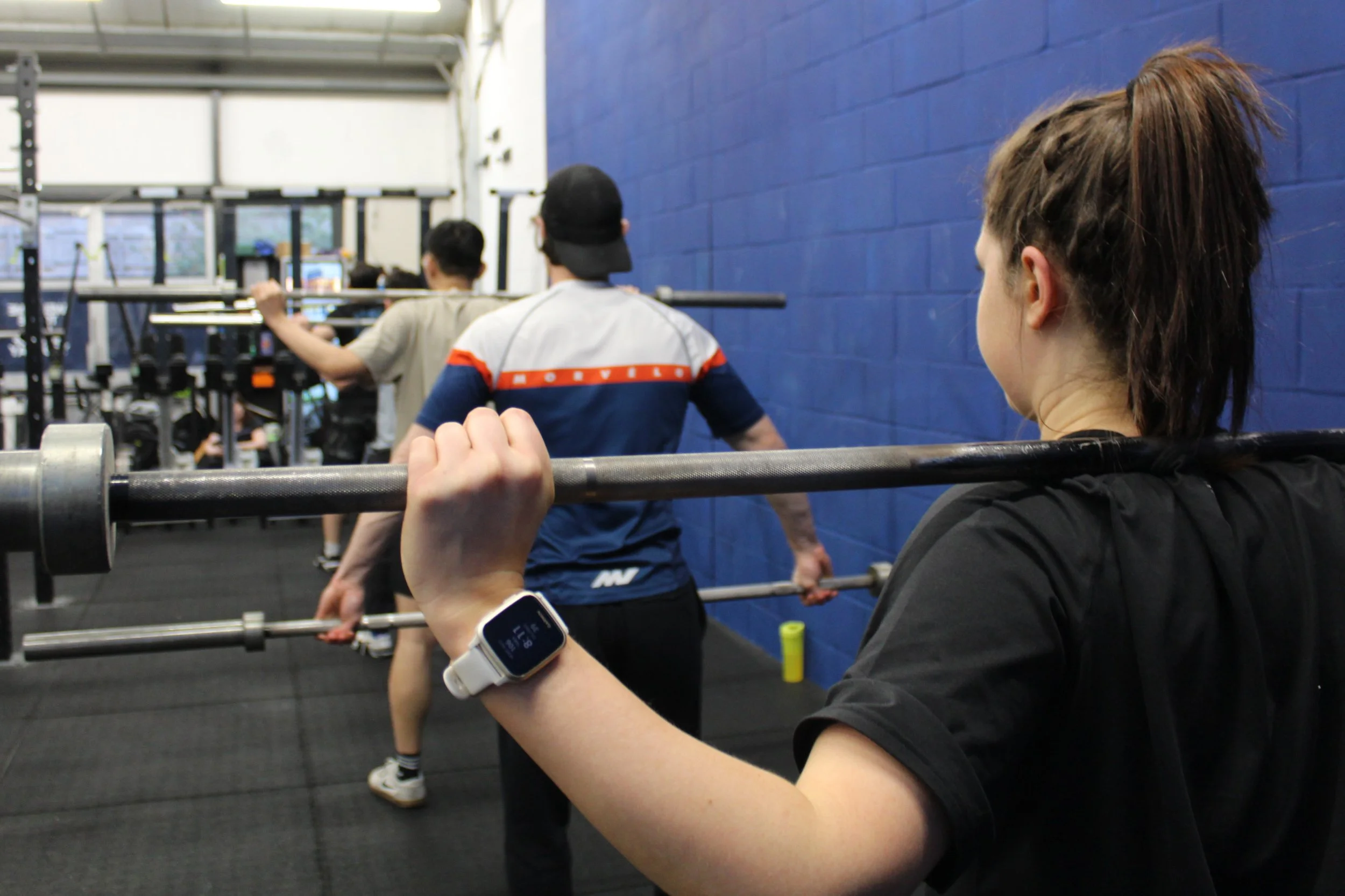
Two to three strength sessions built around squats, presses, hinges, and Olympic lifts. Two to three gymnastics skill pieces that teach you to move your own bodyweight with control. Three to four conditioning workouts that test your engine under different time domains. One to two benchmark workouts that measure progress you can see. Saturday partner workouts for longer, grindier conditioning.
It's deliberate alternation. Strength builds the engine. Conditioning tests it. Skills refine it. Benchmarks prove it.
Take this week's Monday session, part of our Thunderstruck cycle. Back squats, four sets of five at moderate load. Then a twelve minute metcon: ten burpees, twelve kettlebell swings, fourteen wall balls. Repeat until time expires.
The squats prime your legs. The metcon forces you to use that strength under fatigue. That's the blend. That's the magic.
Strength without conditioning is potential without application. Conditioning without strength is effort without foundation. CrossFit refuses to separate them.
What We Actually Track and What Improves Fastest
After ten years of running 1864, the patterns are unmistakable.
Most beginners see ten to twenty percent strength gains in their first three months. One rep max lifts climb fast. Gymnastics skills like pull ups, handstand push-ups, and muscle ups progress steadily once volume builds. Benchmark workout times drop sharply, especially once pacing improves.
Fran times, for example, typically fall by 45 to 90 seconds in the first six months. Row and run pacing becomes smoother. Bodyweight changes happen, though we track those loosely because the mirror tells a better story than the scale.
And here's the surprise most people don't expect: around seventy percent of our members hit a personal record every four to six weeks.
Strength PRs usually come faster than conditioning PRs for beginners. Your nervous system adapts quickly. But once your engine catches up, benchmark times plummet.
The biggest surprise? People underestimate how quickly they get strong.
What Canary Wharf Professionals Actually Need
Our location at Poplar Business Park means we serve a lot of desk workers from Canary Wharf. Professionals who sit for eight, ten, twelve hours a day.
And desk life folds people. Tight hips. Weak glutes. Soft upper backs. Zero pulling strength. They arrive looking fit but moving poorly.
Cardio comes easier to them. They're used to hopping on a treadmill. They know how to suffer through a run or a spin class.
Strength is the missing ingredient. The thing their body is starving for. The antidote to years of sitting.
So when they ask if CrossFit is more cardio or strength, the honest answer for them is: you need the strength more than you think, and the cardio will take care of itself.
How CrossFit Compares to Everything Else
Traditional runners get great cardio. But their strength suffers. Their posterior chain weakens. Overuse injuries pile up because they do the same movement pattern thousands of times without variability.
Traditional gym splits build muscle. But the engine stays weak. Movement variability stays low. Progress stagnates after the initial gains because there's no challenge beyond adding another plate to the bar.
CrossFit offers something different. More balanced improvements. Faster strength gains than runners will ever see. Better cardio gains than bodybuilders will ever build. Higher longevity than either approach alone.
It's not perfect for everyone. But it's better for most people than choosing one or the other.
What I Tell People With Specific Goals
The runner wanting speed: yes, CrossFit will make you stronger and more injury resistant. Keep one or two runs per week. The strength work will make you faster.
The person wanting muscle: yes, you'll build muscle if you eat for it. Our strength and gymnastics combination builds real muscle, not mirror-only muscle.
The person chasing weight loss: yes, CrossFit works. But your nutrition matters more. Always.
The athlete wanting variety: CrossFit is unbeatable.
The Real Answer
CrossFit isn't more cardio or more strength. It's both, integrated, all the time.
The programming forces you to be strong under fatigue. To move fast while tired. To lift heavy after your lungs are burning. To keep your heart rate high while your muscles scream.
That's not cardio. That's not strength. That's fitness. Real, functional, battle tested fitness.
And that's what we build at CrossFit 1864.