Why Beginners Progress Faster in Group Training
Most people assume progress happens fastest when you train alone.
One-on-one. Quiet. Controlled. No distractions.
It sounds logical.
But for beginners, the opposite is often true.
When training is designed well, beginners progress faster in group training than they do on their own. Not because the workouts are harder, but because the environment removes friction.
Motivation is unreliable. Structure isn’t.
Beginners don’t struggle with effort.
They struggle with consistency.
Training alone relies on motivation, and motivation is unpredictable. Some days it shows up. Some days it doesn’t.
Group training replaces motivation with structure.
Classes are scheduled. Coaches are present. The decision to train is already made.
You don’t have to negotiate with yourself.
You just show up.
You learn by watching, not guessing
For beginners, learning new movements can feel overwhelming.
In a group setting:
You see movements demonstrated
You hear cues repeated
You watch others scale intelligently
Learning becomes passive as well as active.
You’re not figuring everything out from scratch. You’re absorbing information constantly, without pressure.
That accelerates confidence.
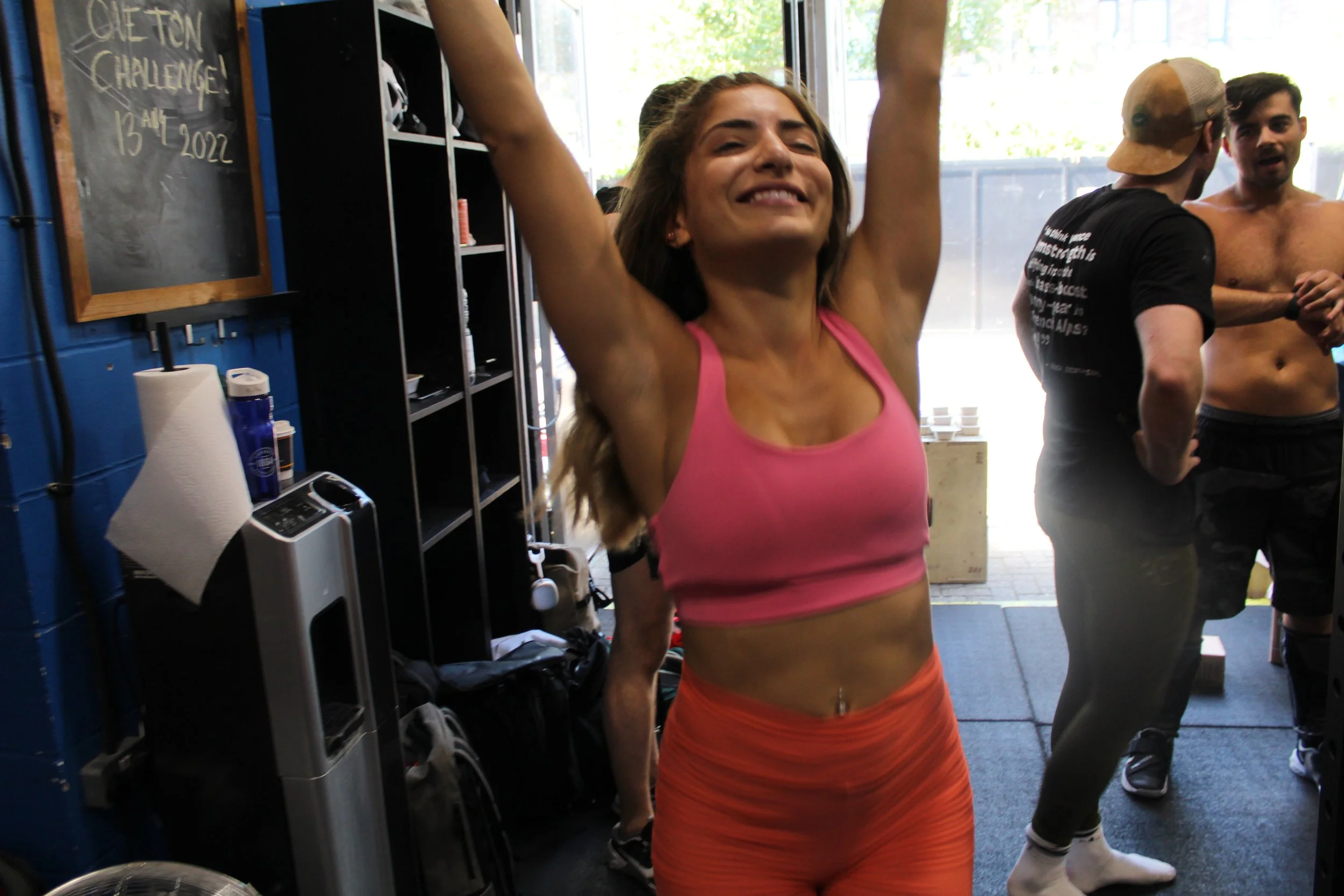
Group training normalises effort
One of the biggest fears beginners have is being seen struggling.
In group training, struggle is normal.
Everyone is breathing hard.
Everyone is focused.
Everyone is doing their own version of the workout.
This matters.
When effort is shared, comparison fades. Beginners stop asking, “Am I doing this right?” and start asking, “How can I do this better?”
That shift changes everything.
Coaching scales better in groups than people think
There’s a myth that coaching is only effective one-on-one.
In reality, well-run group CrossFit classes offer constant coaching:
Movement demos
Verbal cues
Individual corrections
Safety oversight
At CrossFit 1864, beginners aren’t left to figure things out. Coaches are present, engaged, and proactive.
Group training doesn’t mean less attention. It means structured attention.
Community increases consistency
Consistency is the real driver of progress.
Group training builds community without forcing it. Over time:
Faces become familiar
Names are learned
Encouragement becomes natural
Beginners are far more likely to keep showing up when they feel noticed and supported.
That consistency compounds into progress.
You push just enough, not too much
Training alone often leads to two extremes:
Doing too little
Doing too much
In a group setting, intensity regulates itself.
You work harder than you would alone, but safer than you might if left unchecked.
Coaches guide pacing. Scaling options are clear. Rest is encouraged when needed.
This balance is ideal for beginners.
Why this works especially well in CrossFit
CrossFit group training is built around:
Shared workouts
Individual scaling
Clear structure
Professional coaching
At CrossFit 1864, beginners train at levels like Life or Fitness, alongside experienced members training RX.
Same class. Same workout. Different paths.
This removes pressure while maintaining momentum.
Group training for beginners in Canary Wharf and Poplar
Many beginners who join us from Canary Wharf, Poplar, Blackwall, and East India are surprised by how quickly they progress.
Not because they’re suddenly more motivated, but because the system supports them.
They don’t have to plan workouts.
They don’t have to guess what to do.
They don’t have to rely on willpower.
They just show up and train.
Progress is rarely about willpower
Beginners don’t need more discipline.
They need:
Clear options
Supportive coaching
A consistent environment
A reason to come back tomorrow
Group training provides all of that.
Why beginners thrive when they don’t train alone
Progress isn’t about intensity first.
It’s about consistency first.
Confidence second.
Intensity later.
Group training delivers those in the right order.
That’s why beginners often progress faster when they train together.
Not because they’re pushed harder.
But because they’re supported better.
What to Expect in Your First CrossFit Class