Functional Fitness vs Traditional Gym Training: What’s the Difference?
Most people don’t choose traditional gym training.
They just fall into it.
Rows of machines. Fixed paths. Split routines. A lot of sitting down to “get fit”.
It feels safe. Familiar. Controlled.
Functional fitness looks different. And because it looks different, it often gets misunderstood.
So let’s break down the real difference.
What traditional gym training is built around
Traditional gym training usually focuses on:
Isolated muscles
Fixed machines
Seated or supported positions
Repeating the same movements week after week
You train chest day. Back day. Leg day.
It can build muscle.
It can feel productive.
But it often misses one big thing:
how the body actually moves in real life.
What functional fitness is built around
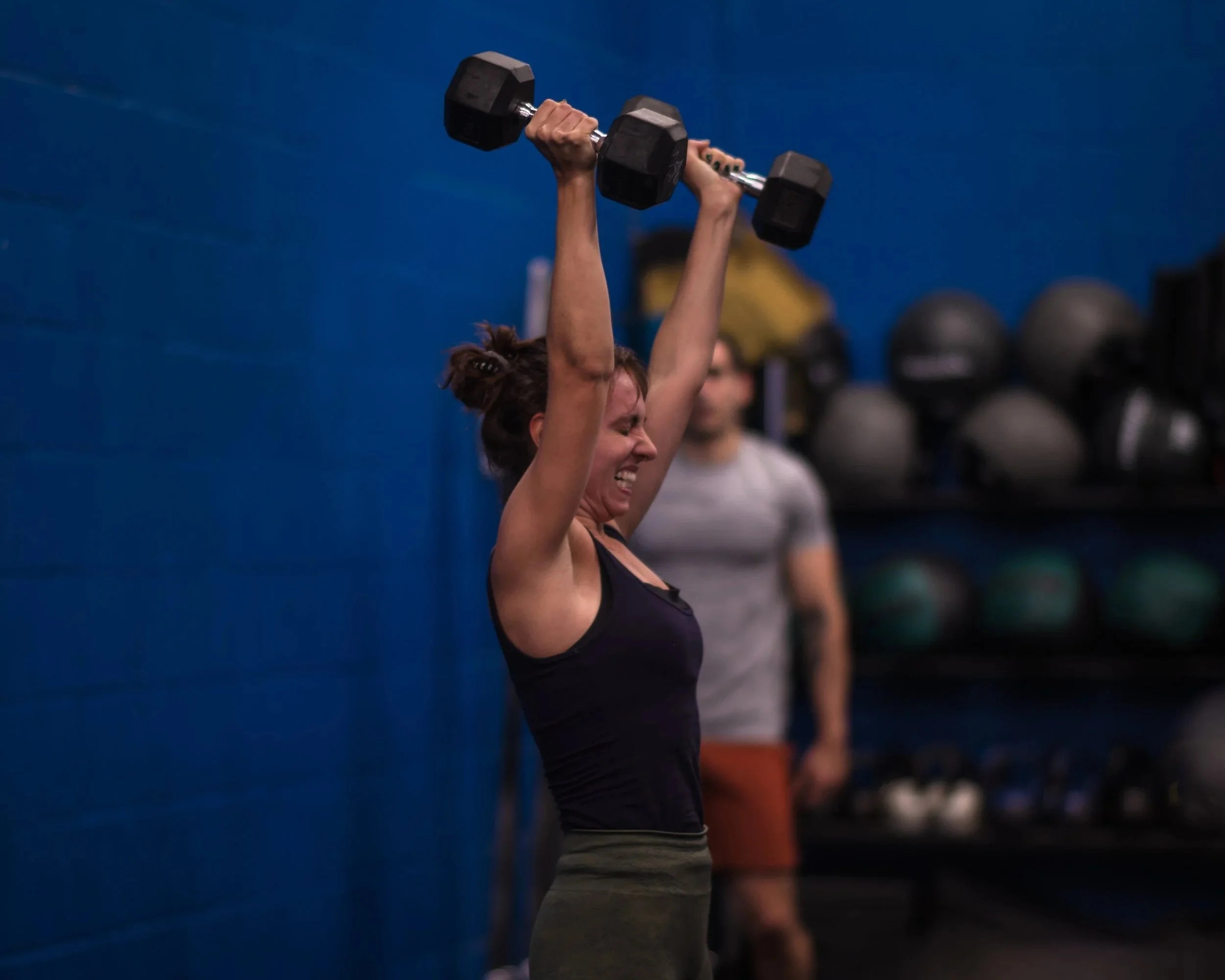
Functional fitness is built around movement patterns, not muscles.
Instead of asking “what muscle am I training?”, it asks:
How does the body produce force?
How does it stabilise under load?
How does it move efficiently through space?
That’s why functional fitness prioritises:
Squats, hinges, pushes, pulls, carries
Standing movements
Free weights and bodyweight
Core engagement as part of every movement
You train the body as a system, not as separate parts.
The biggest difference: transfer to real life
Here’s the simplest way to think about it.
Traditional gym training often improves gym strength.
Functional fitness improves life strength.
Life doesn’t happen seated.
It doesn’t happen on rails.
And it doesn’t isolate one muscle at a time.
Functional fitness prepares you for:
Lifting awkward objects
Carrying weight over distance
Moving with control when tired
Supporting joints under load
That’s where the transfer happens.
Why machines aren’t always your friend
Machines reduce the need for balance, coordination, and stabilisation.
That can be useful in rehab or specific scenarios, but as a main training method it creates gaps.
Functional fitness fills those gaps by:
Requiring you to stabilise
Engaging your core naturally
Training balance and coordination
Strengthening joints through movement
You’re not just stronger.
You’re more resilient.
What about safety?
This is where people get confused.
Machines feel safer because they’re controlled.
Functional fitness feels riskier because it’s free movement.
In reality, safety comes from:
Coaching
Appropriate loading
Good technique
Smart progressions
When functional fitness is coached properly, movements are scaled to the individual and progressed gradually.
That’s often safer long-term than loading a body in fixed positions that don’t reflect real movement.
Which is better for beginners?
For beginners, functional fitness has a big advantage.
Instead of learning dozens of machines, beginners learn:
How to move their body
How to hinge properly
How to squat well
How to brace and breathe
These skills carry over everywhere.
With good coaching, beginners build confidence faster because progress makes sense. Movements improve. Strength builds. Everything connects.
Time efficiency matters
Traditional gym training often requires:
Long sessions
Multiple machines
Separate cardio time
Functional fitness combines:
Strength
Conditioning
Mobility
Into one structured session.
For busy professionals, this matters. You train what counts, without wasting time.
Functional fitness isn’t “harder”, it’s smarter
There’s a myth that functional fitness is only about intensity.
It’s not.
Intensity is a tool, not the goal.
Good functional fitness training:
Scales up or down
Prioritises movement quality
Builds gradually
Supports long-term progress
That’s why it works for beginners and experienced athletes alike.
Functional fitness in Canary Wharf & Poplar
For people living or working around Canary Wharf, Poplar, Blackwall, and East India, functional fitness fits real life.
Long workdays. Desk time. Stress. Limited training windows.
Training that improves how you move, not just how you look, makes a difference you feel every day.
So which should you choose?
Traditional gym training isn’t wrong.
It’s just limited.
Functional fitness offers:
Better carryover to life
More efficient sessions
Stronger foundations
Greater long-term resilience
If your goal is to feel capable, move well, and train with purpose, functional fitness is hard to beat.
Functional Fitness Training in Canary Wharf & Poplar
Is Functional Fitness Good for Beginners?