Is 40 Too Late to Get Into Shape?
Short answer: no.
Better answer: 40 is often the best time to do it.
Most people asking this aren’t really asking about age. They’re asking if they’ve missed their chance. If the aches, the slower recovery, the years of sitting or inconsistent training mean it’s game over.
It doesn’t.
But the approach does need to change.
What people really mean by “too late”
When someone says “Is 40 too late?”, they usually mean one of three things:
I don’t recover like I used to
I feel stiff, sore, or out of shape
I’m worried about getting injured
Those concerns are valid. They’re also manageable.
The mistake is trying to train at 40 the same way you trained at 25, or copying what you see online without context.
Age isn’t the problem. Poor strategy is.
Your body still adapts after 40
This is important.
You can still:
Build muscle
Get stronger
Improve fitness
Lose body fat
Move better
The human body doesn’t stop adapting at 40. What changes is how much it values recovery, consistency, and strength.
Over 40, progress comes from:
Doing the right things regularly
Not doing everything at maximum intensity
Building a base before pushing limits
That’s not a downgrade. That’s just smarter training.
Why strength matters more now than ever
After 40, strength becomes the foundation for everything else.
Strength supports:
Joint health
Bone density
Metabolism
Balance
Confidence in movement
Cardio alone won’t do that. Random workouts won’t do that.
Strength-based, functional training does.
Not heavy for the sake of it.
Appropriate loads, good technique, consistent exposure.
That’s how bodies stay capable long term.
The biggest mistake people make at 40
Trying to “catch up”.
They feel behind, so they push too hard, too fast. High intensity, no structure, minimal recovery.
That usually leads to:
Injuries
Burnout
Stopping again
The goal after 40 isn’t to prove anything.
It’s to build something sustainable.
Getting into shape at 40 looks different (and that’s good)
Being “in shape” after 40 usually means:
Feeling strong day to day
Having energy instead of constant fatigue
Moving without fear of tweaking something
Sleeping better
Feeling confident in your body again
Aesthetics often improve as a result, but they’re not the main driver.
When training supports life, results follow.
Why coached training matters more after 40
Over 40, the margin for error is smaller.
That’s where coaching becomes a huge advantage.
Good coaching means:
Movements are scaled properly
Loads match your ability
Technique is corrected early
Progress is planned, not guessed
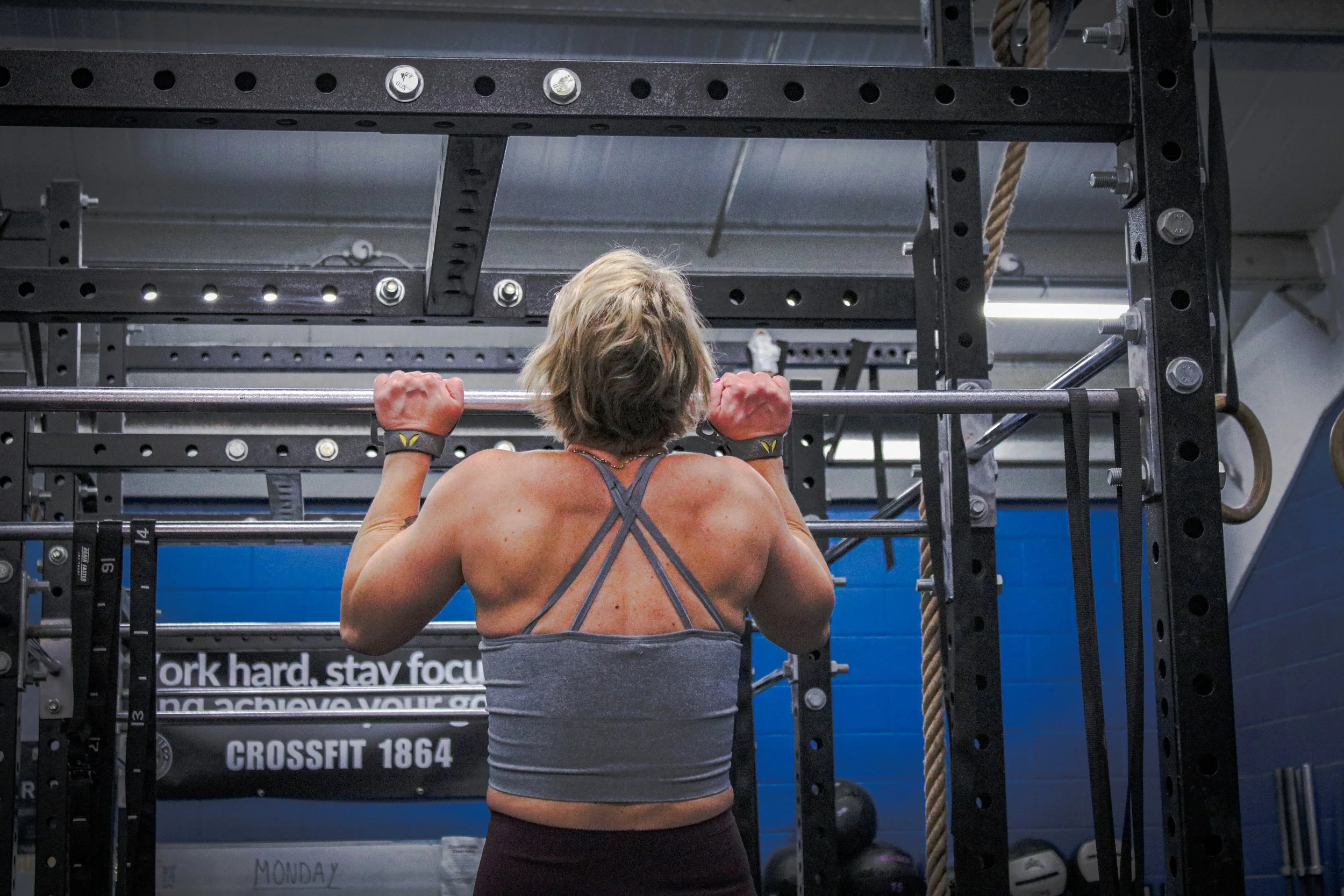
This is why functional fitness and CrossFit-style training, when done properly, work so well for people over 40. Same movements, same class, different levels.
You’re not excluded. You’re supported.
It’s not too late. It’s just time to train differently.
40 isn’t a finish line.
It’s a checkpoint.
Most people at 40 have more discipline, more self-awareness, and more patience than they did in their 20s. Those are huge advantages when applied to training.
If you respect recovery, build strength, and train with intent, getting into shape after 40 isn’t just possible. It’s realistic.
And often, it sticks.
Exercise Over 40: How to Train for Strength, Health, and Longevity
What Is the Best Exercise Over 40?